Piles doctor and surgeon, Dr Sulaiman Most piles can be treated without an operation.

Piles (haemorrhoids) are swollen veins at the anus. Small ones usually settle with diet and toilet habits. Persistent ones are often banded in the clinic, no surgery. An operation is mainly for severe or returning piles.

Many people put this off for months, sometimes years, because it feels embarrassing to raise. The consultation is private, an examination is always your choice, and you can write in first instead of calling.

Last updated 24 September 2026 · Based on Dr Sulaiman's published writing

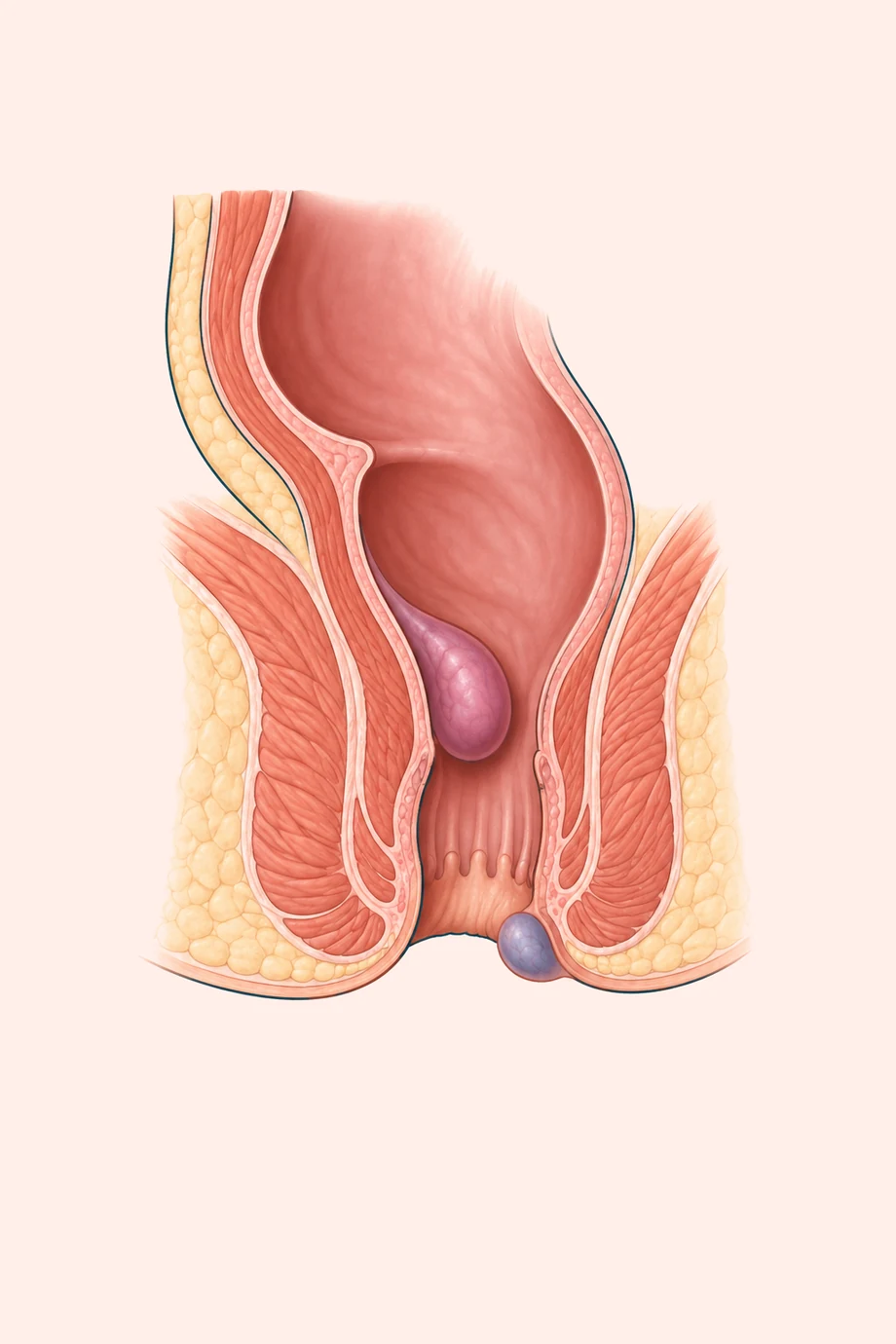
Medical illustration of the back passage in cross-section, showing a swollen internal pile inside the canal and a swollen external pile under the skin at the opening
Private consultations Examination is your choice Write in, no call needed
01

What piles are, and when to see a piles doctor

Everyone has soft cushions of blood vessels just inside the back passage. They are a normal part of everybody's anatomy. Piles are what those cushions become when they swell, and straining is the usual cause.
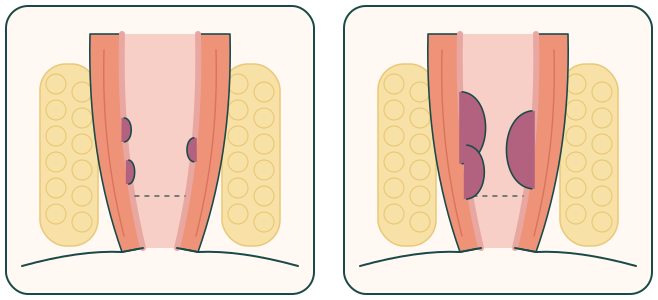
Two diagrams of the back passage in cross-section: on the left, normal small cushions of tissue on the inner wall; on the right, the same cushions swollen into piles
  1. Normal cushionsPart of everyone's anatomy.
  2. Swollen into pilesStraining and constipation make them swell.

Piles are one of the most common reasons adults see a surgeon.

Swollen piles can sit inside the back passage or at the opening, and the two feel different.

Inside, they usually bleed without pain. At the opening, they are more likely to hurt, especially if a clot forms. The difference is explained at internal vs external piles.

It is worth seeing a piles doctor when bleeding keeps coming back, when something comes out as you strain, or when changes at home have not settled things.

Seeing a piles doctor early means the bleeding is checked, the grade is known, and you get the least disruptive treatment for your grade.

Most people wait far longer than they need to, often because it feels embarrassing to raise.

02

Is this you? The moments that usually bring people in

Each of these has its own guide. Tap the one that sounds most like you.

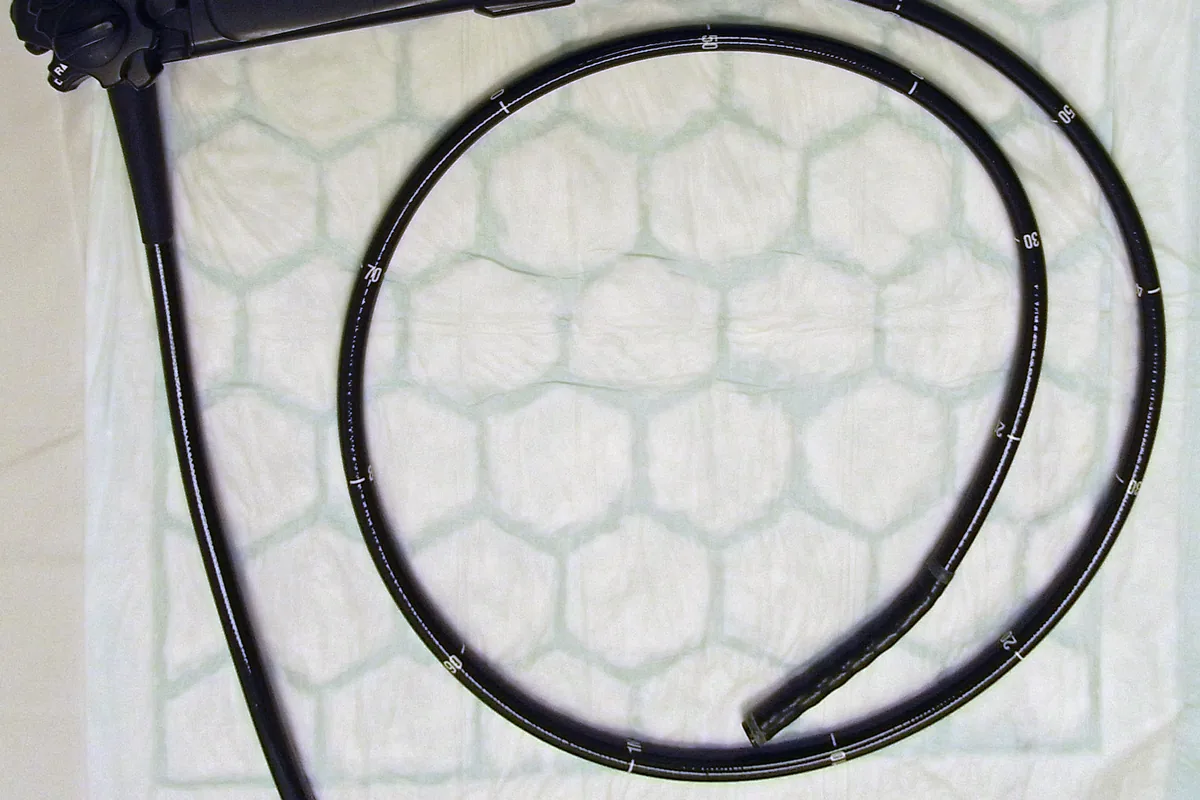
Colonoscope photo: Gilo1969, Wikimedia Commons (file), CC BY-SA 3.0, cropped.

03

The four grades, and what each one usually needs

Piles are graded 1 to 4 by how far they come out of the anus. The grade matters more than the name: it decides what treatment is sensible. Tap a grade.

Bleeding or itching, nothing comes out

The pile stays inside. You usually notice bright red blood on the paper, or an itch, and nothing else.

Usually managed withDiet, fluids and toilet habit changes. A review if bleeding persists, because bleeding should never just be assumed to be piles.

You cannot grade yourself reliably from the outside, and you should not try.

An examination in the clinic settles it, and it is gentler than most people expect.

The full guide lives at piles grades 1 to 4.

04

Blood on the paper, what is common and when to come in quickly

Bright red blood on toilet paper or dripping after a motion is the most common pile symptom. It is also the symptom that most deserves a proper look, because it is not always piles.

Pile bleeding is typically bright red, comes without pain, and is tied to passing a motion. The full guide to this symptom is at bleeding: blood on the toilet paper.

Signs that should not wait

The blood is dark or mixed into the stool, the bleeding happens without a motion, you feel tired or breathless (possible anaemia), your bowel habit has changed, you are losing weight without trying, or this is your first bleed and you are over 40. None of these mean something serious is certain. They mean the bleeding should be examined rather than assumed to be piles.

05

When it is not piles at all

A fissure, a fistula, an abscess and a skin tag can all feel like "piles" from where you sit. They are treated differently, which is why the first visit is about naming the problem, not selling a procedure.

a
Fissurea small tear in the skin
A sharp, cutting pain during and after a motion. Often feared more than piles, and usually the main reason people finally come in.
b
Fistula or abscessan infected tract or pocket
Throbbing pain, swelling, or discharge that keeps coming back. This one should not wait.
c
Pilesswollen veins
Usually bleeding without pain, or a lump that comes and goes. Painful only when a pile thromboses.

The comparison guide is at is it piles or something else.

06

Treatment matched to your grade

Treatment is not a ladder you climb from the bottom. The right one depends on your grade, your anatomy and your circumstances. Keep scrolling: the options are listed in the order most people meet them, and many never need more than the first two.

01

Habit changes

Fibre, fluids, not straining, not sitting on the toilet scrolling. Unglamorous, and genuinely the treatment for grade 1.

SuitsGrade 1, and everyone alongside anything else
02

Band ligation

A tiny rubber band placed on the pile in the clinic. No cutting, and no anaesthesia in most cases. Most people go back to normal activity the same day.

More on band ligation
SuitsGrades 1 to 2 that keep bleeding or protruding
03

Laser treatment

A fine laser fibre shrinks the pile from inside, through a small opening. Most people are back to normal activity within a few days.

More on laser treatment
SuitsGrades 2 to 3, and patients worried about recovery from cutting surgery
04

Stapled procedure

A circular stapler lifts and reduces the piles. Selected cases, decided by grade and examination.

SuitsGrade 3 with prolapse all the way round
05

Excision surgery

The piles are removed. The most definitive option, with the longest recovery: the honest answer is two to four weeks.

Piles surgery, step by step
SuitsGrades 3 to 4, large or returning piles
07

What piles treatment costs

Cost depends on the grade and the procedure, so the honest answer is a table, not a headline number. The figures below are published by the Ministry of Health, not the clinic's own prices.

Surgeon fee benchmarks from the Ministry of Health fee benchmark publication in force from 1 January 2025, before GST. They are a reference range, not the clinic's own price.
Item MOH surgeon fee benchmark, before GST Notes
Consultation and examination Quoted when you write in First visit; examination is optional on the day
Band ligation Quoted when you write in Clinic procedure, no hospital stay
Laser treatment $3,000 to $3,800 (TOSP SF836A) Day surgery
Excision surgery $3,000 to $3,800 (TOSP SF836A) Day surgery or short stay

Laser, stapled and excision surgery for piles are done as day surgery and are MediSave-claimable.

MediSave can be used within limits set by MOH and your own MediSave balance, and the clinic confirms your eligibility.

Integrated Shield Plans commonly cover the rest of a day-surgery admission, subject to your own deductible and co-insurance. What applies to your policy is confirmed before anything is scheduled.

The detailed cost page, with Medisave and insurance worked through, is at piles treatment cost.

08

Recovery, honestly

The fear of a painful recovery stops more people than the condition does. Here is the plain version.

Same day

Banding

Most people return to normal activity the same day. Expect a feeling of fullness and mild discomfort for a day or two, rather than sharp pain.

A few days

Laser treatment

Usually a few days of soreness. The small opening typically heals within seven to ten days.

2 to 4 weeks

Excision surgery

The first week is the hardest. It is also the most definitive option for severe piles, which is why it still earns its place.

Individual recovery varies with the grade, the procedure and your own healing. These are typical patterns, not promises. The week-by-week version for surgery is at piles surgery recovery.

09

About Dr Sulaiman

Dr Sulaiman Bin Yusof

Dr Sulaiman Bin Yusof

Senior Consultant Colorectal and General Surgeon

He trained in Sheffield, took a Ministry of Health fellowship to Melbourne, and has over 20 years of surgical experience. Full profile.

10

What happens when you see a piles doctor for the first time

Two questions decide everything: is this actually piles, and what is the least disruptive treatment for your grade? The first visit answers both.

You describe what is happening

A private conversation about the bleeding, discomfort or lump, how long it has gone on, and what you have already tried.

An examination, if you agree

The examination is always your choice. It is gentler than most people expect, and it is what confirms whether this is piles, and which grade.

Other causes are ruled out

Bleeding and discomfort can also come from polyps, inflammatory bowel disease or bowel cancer, so bleeding is checked rather than assumed. Sometimes a scope is suggested.

A plan matched to your grade

You hear which treatment suits your grade, what the recovery involves and what it costs, before anything is booked.

11

Questions patients ask a piles doctor

Short, direct answers first. Tap any question.

Small grade 1 piles often settle once constipation, straining and long toilet sitting are fixed. Piles that bleed or protrude repeatedly tend not to, and those are straightforward to treat in the clinic.

Most people feel pressure or a dull ache for a day or two, not sharp pain. The band sits above the pain-sensitive skin, which is why anaesthesia is usually not needed.

You cannot know from symptoms alone, and neither can anyone online. An examination, and sometimes a scope, is what settles it. That is why bleeding should be checked rather than assumed.

For surgery, yes. Surgical piles procedures are day surgery and MediSave-claimable, and may be covered under Integrated Shield Plans. The clinic confirms your specific coverage before anything is scheduled.

The consultation is private, and writing in through WhatsApp means no phone call is needed. Embarrassment is the most common reason people delay, and it is the least necessary one.

12

Write in. No phone call needed.

Three short fields, then WhatsApp opens with your message ready to send. Your number is used only to reply to you.

Pressing the button records your enquiry for the clinic, then opens WhatsApp with your message written out. See the privacy page for how the clinic handles your details.