Home/Internal vs external piles
Two kinds of piles, two different problems
Internal vs external piles, and how to tell which one you have.
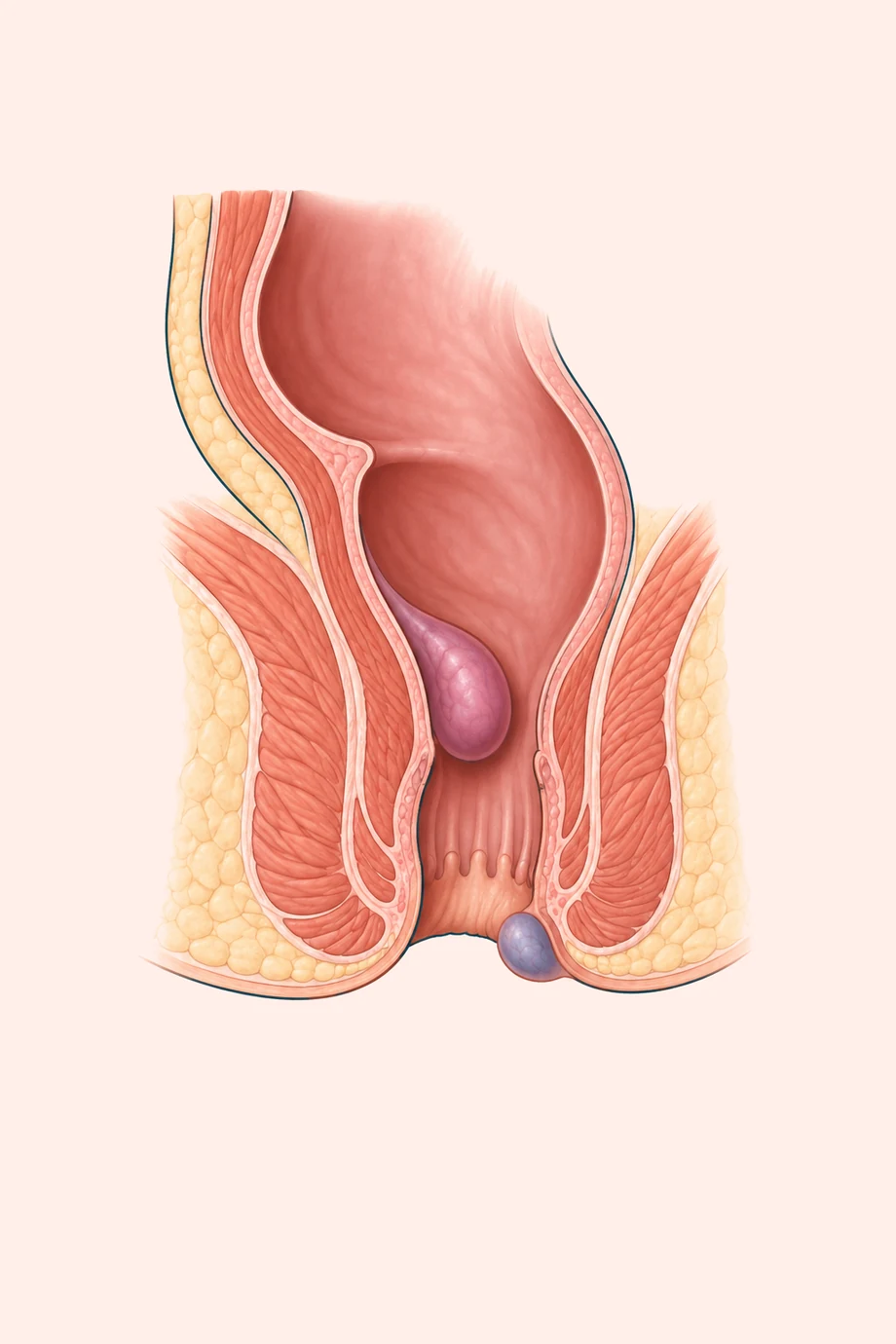
Internal piles sit inside and usually bleed without pain. External piles sit under the skin at the opening, where you can feel them. Many people have both, and an examination tells you which.
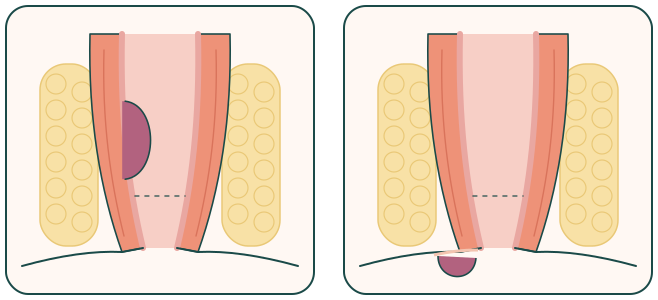
- Internal pileInside, above the dashed line.
- External pileAt the opening, below the line.
Internal vs external piles at a glance
The typical pattern of each. These are patterns, not a way to diagnose yourself.
| Internal piles | External piles | |
|---|---|---|
| Where | Inside the back passage | Under the skin around the opening |
| Pain | Usually none, unless they slip out and get irritated | Often sore, swollen or itchy, especially when sitting |
| Bleeding | Bright red blood on the paper or in the bowl, without pain | Sometimes, if the skin is irritated |
| What you notice | Blood, mucus, a lump that slips out with a motion, or a feeling of not having fully emptied | A soft or tender lump you can feel at the opening |
| Graded? | Yes, grades 1 to 4 by how far they come out | No, they are described separately |
Where internal vs external piles sit, and why only one usually hurts
Just inside the back passage there is a boundary where the lining changes to skin. That line explains almost everything about the difference.
Above the line, the lining is not pain-sensitive in the way skin is.
Internal piles start there, which is why they can bleed without hurting, and why a band can be placed on them in the clinic without an anaesthetic.
Below the line is ordinary, sensitive skin. External piles start there, so they are the ones you feel: sore when swollen, and very painful if a clot forms inside one.
A 2025 review in JAMA describes the same split, with internal piles above this line causing bleeding and prolapse, and external piles below it causing pain.
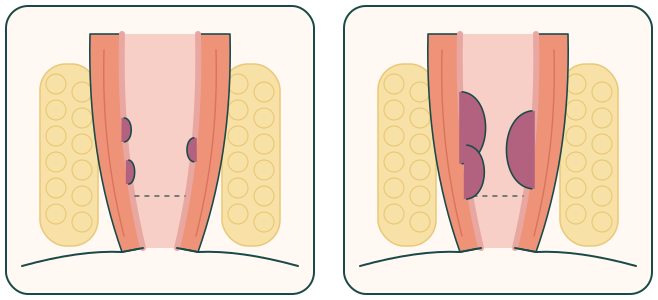
- Normal cushionsPart of everyone's anatomy.
- Swollen into pilesStraining and constipation make them swell.
What internal piles feel like
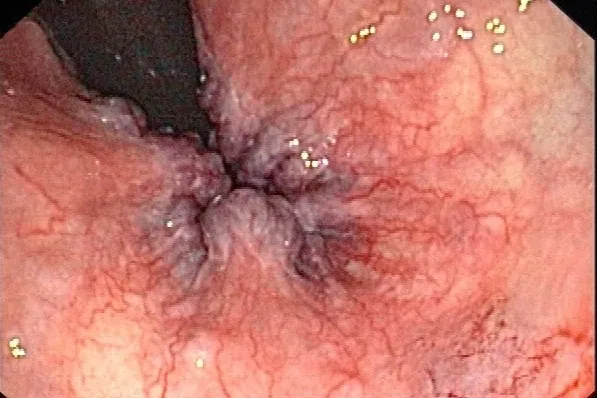
Often, very little. Many people find out from the paper, not from any pain.
What external piles feel like, and why one can suddenly hurt
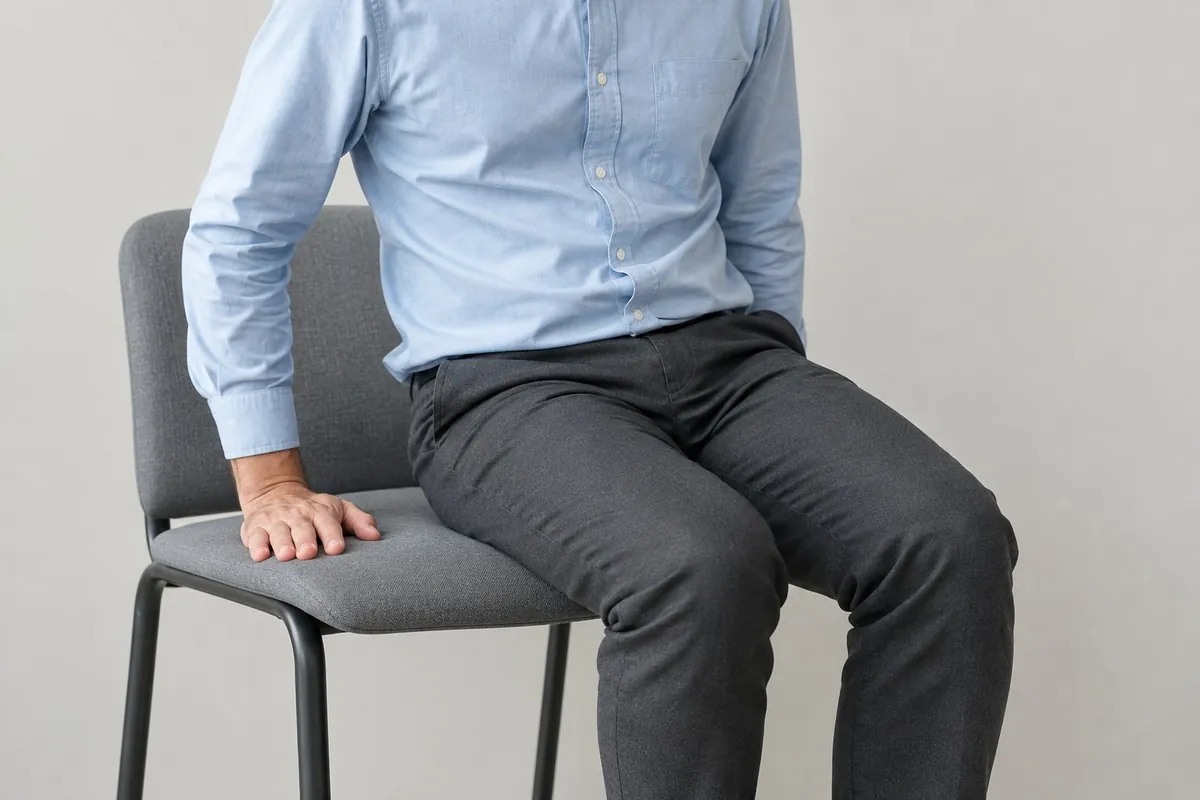
External piles are the ones people describe as sore, swollen or itchy, and the ones that make long hours at a desk uncomfortable.
You may feel a soft lump at the opening, with tenderness, itching or burning, and pain when sitting or passing a motion. If the skin gets irritated, it can bleed a little.
When a lump suddenly becomes very painful
A clot can form inside an external pile. It causes sudden, significant pain and a hard lump that can look bluish or purple. This needs prompt attention.
A 2025 review in JAMA reports that removing the clot within about 3 days of it forming eases the pain and makes another clot less likely.
After that, stool softeners and pain relief are the usual treatment.
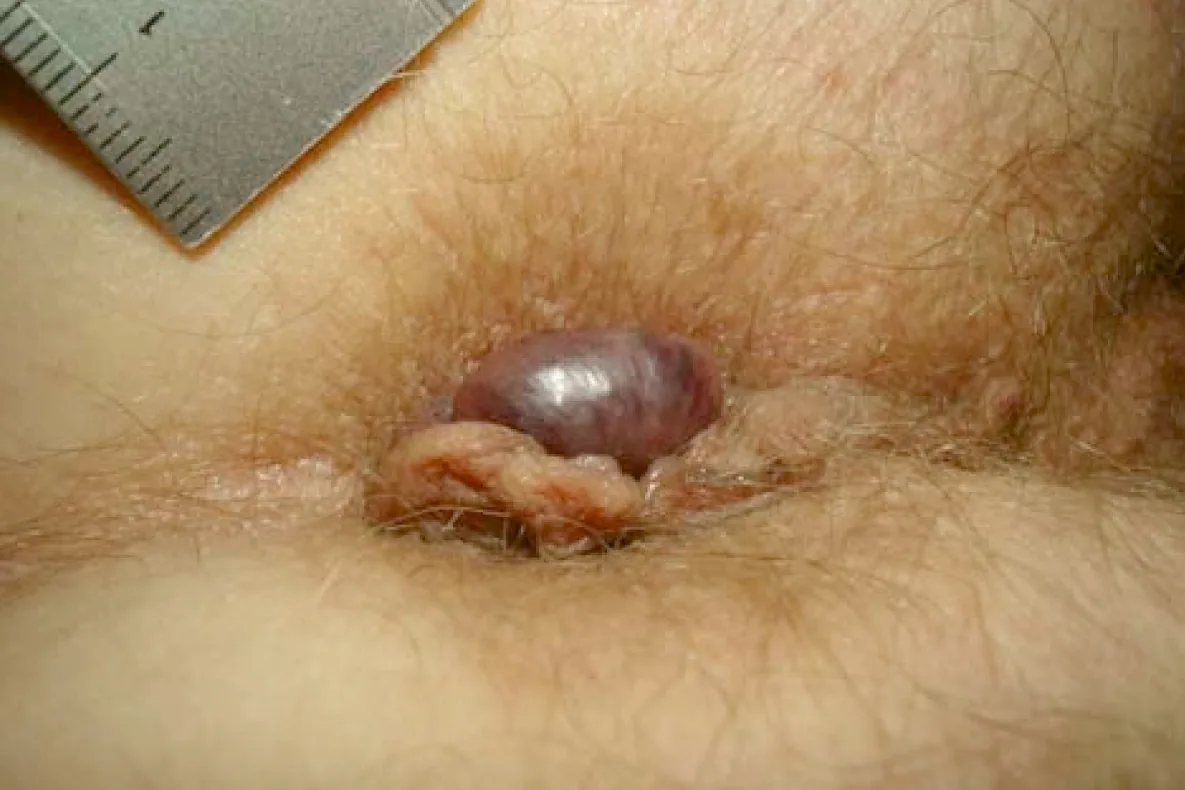
Can you have internal and external piles at the same time?
Yes, and it is common. Doctors call it mixed piles.
When both are present, treatment is planned around the whole picture rather than one pile.
Larger mixed piles, or external piles that are large or have clotted, are the situations where an excision operation is most often recommended.
Once an external pile settles, it can leave a soft fold of skin behind, called a skin tag. Skin tags do not bleed on their own and removal is optional.
How they differ from piles is covered at is it piles or something else.
How treatment differs for internal vs external piles
Internal piles have a range of treatments matched to the grade. External piles more often settle with care at home, unless they clot or keep flaring.
| What you have | Usual first step | If that is not enough |
|---|---|---|
| Internal, grade 1 to 2 | Fibre, water and toilet habits | Rubber band ligation in the clinic |
| Internal, grade 2 to 3 | Banding, or laser treatment if too large to band | A stapled or excision operation, chosen by grade |
| Internal, grade 3 to 4 | Piles surgery | Planned at the consultation |
| External | Care at home; surgery is rarely needed | Excision if large or keeps flaring |
| External, clotted | Prompt review; the clot may be removed within about 3 days | Stool softeners and pain relief after that |
For internal piles, banding resolves symptoms in 89% of patients in a 2025 JAMA review, although up to 20% need it again.
An excision operation brings recurrence down to 2 to 10%, at the cost of a longer recovery.
A 2021 meta-analysis of 8 randomised trials found the same trade-off: better control after surgery, less pain after banding.
Home care for both kinds is at treating piles at home.
Questions people ask about the two kinds of piles
Neither is dangerous in itself. External piles tend to hurt more; internal piles tend to bleed and, at higher grades, slip out. Which needs more treatment depends on size and grade, not on the name.
Sometimes you can feel an external pile, but an internal pile that slips out feels similar, and other conditions such as a fissure or skin tag can feel like both. An examination settles it in a few minutes.
Internal piles sit above the pain-sensitive line, so they can bleed without pain. That is typical of piles, but bleeding should still be examined once rather than assumed, because some other causes of bleeding do not hurt either.
No. A band only works on internal piles, above the sensitive skin. External piles are managed with home care, removal of a clot if one forms, or an operation if they are large.
Many settle with home care and time. A clotted one is very painful at first and worth having seen early. One that settles may leave a harmless skin tag behind.
Sources
- Ashburn JH. Hemorrhoidal disease: a review. JAMA, 2025. PubMed 40824576
- Dekker L, et al. Rubber band ligation versus haemorrhoidectomy for grade II to III haemorrhoids: a systematic review and meta-analysis of randomised controlled trials. Techniques in Coloproctology, 2021. PubMed 33683503
Not sure which kind you have?
A short examination tells you, and what it needs. Write in through WhatsApp, no phone call needed.
Ask the clinic